Saturday, December 21, 2024

Final Blog Post

It is hard to separate this inquiry class with the garden - if there's any class I feel most attached to the garden it is inquiry. Perhaps it was the three straight hours spent there on Thursdays but I know for certain it was the moments we spent by ourselves reflecting in the garden (for me, the grapes). As I look back on my blogposts for this class I'm realizing where the non-traditional teaching methods and weaving Indigenous pedagogies came from in my education this first semester. Having Susan for three courses this semester, sometimes the lines get blurred and you don't remember which things you learned in which class but now I know. Rope-braiding, Salish weaving and such were taught to us in this class and what a wonderful semester I had doing such activities and learning such things. 

It is ironic that in this class is where we learned these things and then it is also in this class that I had my project be on student engagement. I really do want to try using one of these activities or crocheting during arbitrary math lessons to see if it could help student engagement.

Inquiry is definitely a journey and one I look forward to continuing throughout the rest of this program. Honestly, the blogposts are much fewer than I remember but I think that's because the class was only once a week. Within a few scrolls I'm able to reach posts from September where we discussed nature in heavy detail. I think this sort captures the essence of inquiry for me, reflecting and thinking. Critical thinking. Comparative reasoning. What we did in the garden in terms of comparing nature with manmade gave us the opportunity to critically think about such things outside just the garden and buildings around us. It also gives us the opportunity to reflect on mathematics outside our classrooms and how we can bring different lines of thinking into them.  

Mark and Teij's Cartesian Plane

Gosh, can I write about anything else but Teij and Mark's cartesian plane? I mean, how did they even come up with something so complex, simple and captivating in the short time Kathryn gave us. I'll say it again Susan, we really have some remarkably insightful individuals in this math cohort. 

I'll be completely honest - I was extremely nervous walking into class this Thursday. I was petrified that Kathryn was going to ask us to do some embodied movements and dance. When I first saw her I was astonished that this was the same person who wrote the article "The Butterfly Catcher". In her physical experience was extreme simplicity; simple black pants, a very nice black button-down and there was definitely some character in her blue sneakers. Simple haircut which seemed to be her natural hair colour. I was not expecting her to look the way she did and I was selfishly, pleasantly surprised to see her dress the way I dress. 

I recall during the entirety of her presentation I kept thinking how could this be the same person that wrote that article? Her words and voice was so loud in that writing but in real life her voice was soft. I saw snippets of the person I perceived her to be when she went into poses and embodied movements and I had the realization I should've known in the first place. Art transforms people. Still, I could sense that there was an air of growth, wisdom and maturity that had settled on her over the past 40 years and I so badly wanted to ask her if she herself noticed any change in herself. I didn't have the courage to ask but also, I didn't want to project my perception of who she was especially because I barely know her (technically, I don't know her at all). 

As we've been learning this entire semester, Kathryn delivered yet again more non-traditional methods in mathematics education. Math really is all around us. In the same way that we can find beauty if we truly look with the right eye, perhaps there is something similar in finding ways to teach math that is non-traditional. Perhaps giving students something completely unrelated to mathematics and asking them to draw a story or find a connection (as Kathryn did with us) is an effective way to help students help themselves learn, explore and create. 

The Butterfly Catcher

I read Kathryn Rickett's essay, "The Butterfly Catcher" several days before our class with her and I remember having to sit on it before writing a reflection on it. Clearly the days passed and I did not end up writing one but I remember I wasn't prepared to write it fresh after reading it. We've encountered a lot of embodied mathematics through physical movement and dance in this course and I have always struggled with it.

There are a few points as I try to break down my interpretation of her essay. It was without doubt, hard for me to relate to. Immediately after saying such a thing, I find it imperative to mention that it isn't always about finding something that relates to you - there doesn't always have to be such a self-centred approach whenever you interpret media in any form. Sometimes, despite the lack of personal connection, you can appreciate something for what it is and find the beauty of it through the creator's perspective. I was unable (unwilling?) to do that while reading this writing. Part of it I think was the conviction with which Rickett's wrote. Truly, I was unable to get passed the dominating topic of dance and performance to see through to the shared emotions of humans such as perseverance and true friendship. 

As I sit here now (actually I'm standing because I hurt my back playing basketball), I'm enamoured by Kathryn's gesture of staying by her friend's side during a difficult time for him. To drop everything, and go to her friend to help him with his life is something remarkable and shouldn't be looked over despite unshared hobbies and interests. 

I am not sure if you remember "Humans of New York". It's basically a man who used to take pictures of people and post his conversation with them in the caption - to say it took the world by storm may be an understatement. There are several posts that I know will stay with my for life; one of which was of a man who was (is?) a photographer. If I remember correctly, his partner had passed away and he said when he used to come to the park he used to see beauty in everything and could take many photos every day/week. After his partner passed, he was barely taking a picture a week. There is something so profound about that and I couldn't help but think about it when reading this article. I have an obvious inability to see the beauty and appreciate the meaning behind Kathryn and Jorge's dance act/performance. I am sure however they themselves as well as the dancers and audience members who can find appreciation in it will see the relevance, will capture what's being said and will find the beauty in it.  

Body Measurements

I'm going to have to go back almost two months to try to recall this particular Thursday. If I remember correctly, Susan had us use our fingers, hands, arms and other body parts to practically plant seeds that had instructions in metric (or imperial?) measurements. Brandon and I chose I forget which plant but we used rough approximations on our bodies to hypothetically plant the seeds. For example - if the instruction said to plant them in one-inch wide sections, we said the middle joint of our thumbs to the top was about an inch. As I'm reflecting on it now, I'm wondering how we could have done this without having the initial knowledge of what an inch is. Even in the table provided, it lists our body measurements in rough approximations to measurements we already know/have knowledge of. I know this is 450 and not 442 but I'm wondering now how things were standardized by Babylonians during their time. It's not like everyone's feet or arms were the same size, but then again I guess since their measurements were for practical, personal use it was only necessary for them to know what something measured in as. I remember my mom using her hands a lot to measure stuff like furniture; only she needed to know how many of her hands it was because she was taking the measurement and going to the store to buy the appropriate item. Or she would do it with fabric and then go to the store and buy the appropriate length - again, it was an extremely customized and personalized measurement tool. Humans have always been innovative - this is a given. 

The most enjoyable part of the class for me was when we did the sundial exercise as a class. Often, I end up in my own thoughts and that's exactly what happened as I was observing the shadow made by the long stick we were using. I was trying to figure out the length of the shadow in relation to the object due to the position of the sun. In Islam, we have five daily prayers (our day goes from sunset to sunset so technically the night comes before the day). The prayers are spread out during different parts of the day: for example one is to be prayed from about the time the sky starts to brighten (the sun is 15-18 degrees below the horizon) and the time for this prayer cuts off as soon as the sun starts to rise about the horizon. Another one is prayed after the sun passes the zenith. One prayer is prayed from when the height of the shadow of an object is the same height and this prayer's time cuts off at sunset. I was so captivated by the length of the shadow because I was trying to figure out if it's length was greater than it's height. I also knew that the sun had not passed the zenith up until that point (our inquiry classes are in the morning and the sun passes the zenith around 12pm-1pm). Honestly, I was so absorbed in this that at one point I walked to the other side of the circle, picked up a decently sized branch and started trying to measure the length of its shadow by marking the place where its shadow stopped and then comparing it to the height of the branch.

I think I went off on a tangent but I recall that day for that specific experience of mine and so I felt important to discuss and share. Thank you for reading!

Friday, December 13, 2024

Inquiry Reflection

 I'm glad that Susan's prompt for this blog post says "...so far" because I know that I am far from done with my topic. It was an interesting experience to start with one topic (intercession during student disengagement) and end up with something far different (engagement) due to the research. I feel like that change has been my experience in this BEd program in a nutshell; you have one opinion, experience something, change your opinion, read something, change your opinion again, experience another thing, change your opinion again and so on and so forth. It's a constant learning process, up and downs and constant adjustments.

The research has been extremely interesting thus far. I think learning about the different domains of student engagement as well as how teachers perceive them will help me tackle student disengagement in my long practicum. It's interesting, sometimes you read something some time and in a moment where you're going through a relevant experience that thing you read will come to mind. I hope the same for me in my classes because there are all these important nuggets of information I'm learning and although I may not remember them all, I am sure at relevant times during my teaching experience I will randomly recall something I learned and put it to practice. 

Saturday, November 23, 2024

Inquiry and Dividing by Zero

I had a wonderfully insightful conversation with Susan today regarding my inquiry topic. I was able to share how I sort of changed my topic after doing some research because I don't think students should be disengaged. Among the many insightful things Susan offered, the idea of different kinds of flow was especially intriguing. We discussed how there are times when we can be busy with our hands and find it easier to pay attention and learn something. Susan brought up how Jasmine is able to crochet seamlessly in class while being fully engaged in classroom discussions. This realization was eye-opening. I and I am sure many others have mastered the art of giving someone your full attention and not listening to a single word they say. How to make teachers think that you are listening and paying attention. Susan discussed flow in terms of driving and this is true too! At some point you just get into the flow of three pedals and the shifter and you're no longer thinking about the road in front of you.

Everyone is able to tap into this, everyone can free up other parts of their brain while they engage in some activity that doesn't require thinking - it's almost muscle memory. How can we incorporate this into our classrooms? I was telling Susan it doesn't take long to learn how to crochet; you can get the gist of simple patterns in a few days. If we put in an initial investment for a week in our classrooms, I think it would be of immense help to have students crochet while I have to teach arbitrary concepts. It doesn't have to be crocheting, students preferences can definitely be catered to. Sometimes our fidgetiness contributes to our inability to pay attention. Mitigating this by something like crocheting can be especially helpful during technical, "boring" math classes. We also discussed how it was important to ensure there was some purpose to the physical activity. Just using a fidget spinner can draw all of the students attention because then it becomes a game. Crocheting however fulfills some purpose and tangible result of the student's effort. 

This completely reframes the idea that "Flow" has to be challenging - you can be in this state of flow while doing something that it completely routine and mundane for lack of better words. 

I still don't think I have a good way to explain dividing and multiplying by zero. Showing the asymptotic graph of 1/x certainly visualizes it but for me personally I need to understand it in my head before confirming it through visuals - not the other way around. I only know the rules when it comes to multiplication and division of numbers less than or equal to zero. I think I'm having difficulty because zero is both a number and something that doesn't exist which is a little contradictory. I'm going to have to ask my colleagues again because I think they explained it in a good way but now I can't recall what they said.

Annotated Bibliography Template


                                                                          When I began researching my topic of student (dis)engagement I was noticing a trend in the short abstracts I was reading. There is a common, important connection between student engagement and student success. This led me to revise my inquiry question into ensuring our classrooms are fully engaged. The stance I took prior was about when to allow students to be disengaged and if it could be beneficial. With the concrete evidence that student engagement has many positive effects on students I think it is imperative that we all strive for student engagement as educators. 

Student engagement is an especially passionate topic for me. I think it encapsulates so much of what goes on in a classroom. It captures the teacher-student relationship, the student-curriculum relationship, the student-classroom relationship and the student-student relationship. When I'm observing a classroom, I find that my attention always drifts to those not engaged and I spend considerable amounts of time trying to figure out why this student, in this class, in this classroom, with this teacher is not currently engaged. 

Annotated Bibliography


Skilling, Karen, et al. “What secondary teachers think and do about student engagement in 

    Mathematics.” Mathematics Education Research Journal, vol. 28, no. 4, 5 Nov. 2016, pp. 545–

    566, https://doi.org/10.1007/s13394-016-0179-x. 


    This article offers insight onto teacher’s perceptions regarding student disengagement. If we as teachers     cannot accurately pinpoint where or why our students are disengaged, we won’t be able to help them be     engaged in our classrooms. 


Brantlinger, Andrew. “Critical mathematics discourse in a high school classroom: Examining patterns of 

    student engagement and resistance.” Educational Studies in Mathematics, vol. 85, no. 2, 18 Aug. 

    2013, pp. 201–220, https://doi.org/10.1007/s10649-013-9506-2. 


    Often there are reasons outside the classroom contributing to why students are not engaged inside the        classroom. This article offers an alternative method of teaching mathematics that can potentially reach       students who are the least engaged. 


Nielsen, L., Skovsmose, O. “Critical Mathematics Education.” International Handbook of Mathematics

    Education, vol. 4, 1996, pp. 1257-1288, https://doi.org/10.1007/978-94-009-1465-0.


    Based on the last article I needed to find more information on the origins of Critical Mathematics               Education. Chapter 35 in this book offers an overview of Critical Mathematics education as well as a        detailed analysis of the concept.


Uekawa, Kazuaki, et al. “Student Engagement in U.S. Urban High School Mathematics and Science Class- 

    rooms: Findings on Social Organization, Race, and Ethnicity.” The Urban Review, vol. 39, no. 1, 

    March 2007, pp. 1-43, https://doi.org/10.1007/s11256-006-0039-1.


    This formalized study gives factual evidence based on statistical research on student perceptions of            classroom activities. The authors describe how various factors affect student engagement and how            different students respond to different kinds of activities. 


Shernoff, David, et al. “Student Engagement in High School Classrooms from the Perspective of Flow 

    Theory.” School Psychology Quarterly, vol. 18, no. 2, 2003, pp. 158-176.


    Mihaly Csikszentmihalyi, who is also an author on this paper conceptualized an important phenomenon     by the name of “flow theory”. “Flow” is an important factor in the journey of student engagement and        this paper presents research-based evidence on what helps students get into “flow”.


Kohn, Alfie. “Is It Enough for Learners to Be “Engaged?” https://www.alfiekohn.org/blogs/engagement/. 

    Accessed 16 Nov. 2024


    Kohn challenges our understanding of engagement in this insightful article he wrote and posted on his        website. He highlights the important role of student motivation and objectives and compares it to the        shallow idea of mental focus. 


Walther, Erika. “A Fresh Approach to Supporting Students Who Are Disengaged and Task-Avoidant.”        

    Truth For Teachers, 16 Feb. 2023, truthforteachers.com/supporting-disengaged-task-avoidant-

    students/. 


    This concise and easy-to-read guide on how to help students that are disengaged provides both reasons     for disengagement as well as how to approach them as teachers. 


Lei, Hao, et al. “Relationships Between Student Engagement and Academic Achievement: A Meta-

    Analysis.” Social Behavior and Personality, vol. 46, no. 3, 2018, pp. 517-528


    This article analyzes aggregate research on the correlation between student engagement and academic        success. Since there are arguments on both the positive and negative, this extensive study is important        in showing how there is a positive correlation between the two. 


Gunjuc, Selim. “The Relationships Between Student Engagement and Their Academic Achievement.” 

    International Journal on New Trends in Education and Their Implications, vol. 5, no. 4, 2014, pp. 

    199-214.


    This article studied 304 students to test the correlation between student engagement and student                achievement. Importantly, it examined the factors of cognitive engagement, behavioural engagement        and sense of belonging. 


Friday, November 8, 2024

Inquiry Discussion Exit Slip

When we were in the garden and we chose - I have to interject with a sudden thought. That time in the garden when we first said our inquiry topic I realized Susan also had us standing in an oval (a round not circle shape). Why is she doing that for this specific topic? She made us stand in an oval when we first said our topics out loud and then again yesterday we were standing in the same orientation. I wonder why, something to ponder on I guess because if I've noticed anything in Susan's class there seems to be a reason behind everything - it's intentional. 

As I was saying, when we were in the garden and we said aloud our inquiry project I had to make mine up on the spot because I wasn't aware we had such a project in the first place (this seems to be a common theme for me in school). I blurted out student engagement in a haste but also because it is something that really interests me. The first thing I thought about when I imagined a classroom is reaching students that are disengaged. 

During my practicum, I wasn't thinking about my inquiry project when I talked to both of my SA's about student engagement. I'm going to take this as a good thing, because it means I'm genuinely interested in it (like Leon and cheating). 

I think that's it for my exit slip but I do want to discuss one more thing. 

a picture of us following Tak and Kody's talk

I have had the best time engaging with my cohort and listening to their thoughts, ideas and feelings. Going around the circle and listening to everyone's inquiry project was astounding; literally every topic had depth, significance and relevance. It was honestly a joy to hear so many different, wonderful ideas. This brings me to the point of how much I really value listening to my colleagues. I don't think I've ever been in this kind of situation where I spend so much time with a variety of individuals where every single person has something insightful to offer. In the picture we're missing a few including Andy, Mark, Taha and Teij. I could go on but I'll end it there. 

Sunday, November 3, 2024

Marking, Grading and Ranking

There are not enough hours in the day or days in the semester to comprehensively and concisely answer the plethora of questions regarding grades in school. 

Assessments, grading and student learning were prominent themes in the many conversations I had with my school advisors over my two week practicum and I sit here still with many more questions than answers. 

It is not unknown that marks, grading and ranking create stressful environments for students and teachers alike. The easy answer would be to say, "get rid of those things!" However, we cannot. If you ponder on it within the schooling system (up to and including high school) from the top down where the top is university admissions, it is certainly impossible to get rid of grading. Even if we hypothetically remove that overbearing aspect of schooling, we need to be able to assess students to measure their learning. In the purest sense, this is what grading should be - an assessment of student learning. 

In my own experience, grades for the most part didn't mean much to me. I did really poorly in university during the first couple years of my undergrad. If I wasn't failing, then I was getting somewhere in the 50s and maybe 60s. I recall in the first semester of my second year I received a test back in my probability class. If I remember correctly I had gotten a 90 (I believe it was a 36 or 37 out of 40). I remember getting it, looking at the mark and then putting it in my bag as I did with all my tests. I had a profound moment after I put it in my bag - I realized I was doomed. I felt the same about that 90 as I did my other tests that I failed. The grade was supposed to be a reflection of my learning or my performance but whichever it was, I realized I didn't care. And if I didn't care, then why was I there? I started improving my grades in the latter half of my third year and all through fourth year when I found out there was a minimum GPA required in my program. Extrinsic motivation right? I do remember something from that year and a half though. I struggled mightily in a certain professors statistics class - in one of them according to my math I should have failed but he gave me a 51 which I was not happy about. In fourth year I had him again for a time series analysis class. I was determined to do well. I remember studying extremely hard and I actually got an A on the first test. I remember feeling so happy with myself. There was something there, it was that hard work and reward relationship. I think that's something that all humans can attest to and find common ground in. It can be about anything, not just grades. 

John Sarte and Sherri Hughes are touching on this but there still lies this underlying question of how can we get students interested in the content to motivate them to get to that place of working hard. If it's not that, then what motivation can exist to push them there? 

I'm sure I'll be asking this question my entire career God willing I become a teacher one day.  

Saturday, November 2, 2024

Poetry

 It feels like these grapes are breathing life into me every Thursday...

Poetry is not something foreign to me however I haven't been able to write a poem in many, many years. Not to say I haven't tried. When I used to write poems, they would come to me naturally however at some point that stopped. I think perhaps it's because I switched from writing poems to "just" writing. I guess for me as long as I have the ability to let my thoughts flow through words, I'm happy. I'm also happy that I was actually able to write something resembling a poem for this class (maybe it's because I sat with purpose to write a poem). I've shared it below.

"Oh grapes, bunches of grapes
As I walked to your dwelling
I did not know what to expect
I felt that you would not be there, to make me smile

My fingers are a little numb
And I have seen many leaves succumb to the cold
Oh grapes, as I walked to your dwelling
I felt that you would not be there, to make me smile

Your leaves have lost their green
To a pale yellow
Some have wilted
And some have fallen

But as I sit in your dwelling, I am so happy to see
That you have not changed much
You are still round, and green, and small
And now I know you are also strong

Some of you have changed, but in a good way
Because you have gotten a little dry
And surprised me the same way you did
The first time I saw you

So as I walked to your dwelling
And as I sat in your dwelling
And as I walk back from your dwelling
You have made me smile

Because you are grapes
Sweet, sometimes bitter
But always tasty, and I forgot
That you are also raisins"


Braiding Sweetgrass

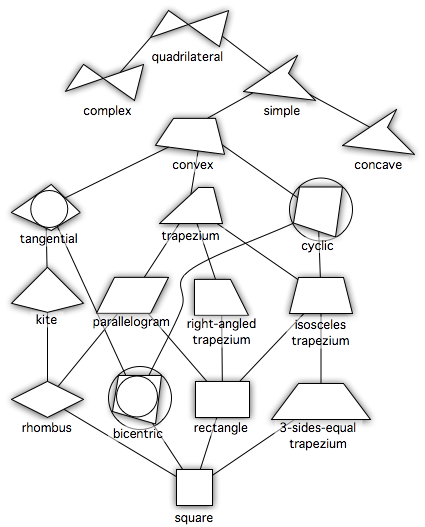
 I'm writing this entrance slip quite late and I have accumulated some knowledge during my two week practicum that changes how I would've have written this one month ago. Thinking on it now, there's a trend in mathematics that you define what you need and within the confines of which you need it. For example, a quadrilateral is defined as a four-sided polygon. We take it further by confining it within the boundaries with which we will see, study and use them; usually at least one set of parallel lines and all angles being less than 180 degrees. This type of approach although useful to serve a specific purpose could be considered a disservice to the imagination of people and to the things themselves. 

In Dr. Robin Wall Kimmerer's "Braiding Sweetgrass" she talks about a bay - or more accurately, to be a bay. In English we've used the word "bay". In Ojibwe, the word used to describe the same thing is "wiikwegamaa" which translates to, "to be a bay". Her explanation on a bay being alive and that it is not dead and thus cannot be referred to as a noun but instead a living, moving being as a verb is something that truly captivated me. If you go to a bay you can see the current from the sea/ocean. You can see the tide rhythmically bouncing off the shore. It is being. 

I think the grammar of animacy itself as Dr. Kimmerer calls it is something important that can be shared and discussed in every classroom - especially with younger students. Adding this layer of recognizing plants and animals for something outside what we as humans interpret them as will allow one to show a more wholesome level of respect to their surroundings. 

Friday, September 27, 2024

A Note on Students

my bullrush keychain rope
We may be more mature; we may be referred to as colleagues however we are still in some ways, students. I can't recall the last time when I did not hear a single zipper or the sound of someone packing up nearing the end of class. Considering this class went over, this feat is even more astonishing. I remember looking at the clock as it was nearing 12:20 pm and then looking around the class and absolutely nobody was packing their things. They were either consumed with their braiding, or looking at whoever was sharing. Honestly, I found it really interesting and began thinking about why this was the case. We were all in school. It was a relatively early start to the day and it was nearing the end of the week. It was a long class. We were in a classroom. The only difference I could identify was the nature of what we did in class. Rope braiding was very relaxing. It was interesting and there was enough of a variety of material for people to explore and exercise curiosity. It was a simple enough task, with enough complication to require some attention but not all. I don't know - it was almost like a perfect intersection of many things. Throw in Jacob's carrots and the combination was without flaws. A lot more can be said on this and I'm sure I'll look back and ponder on this specific classroom experience for many years to come. 


Kallis and Backsourcing

 As I was reading the short excerpt from chapter two from Sharon Kallis' book "Common Threads", I found myself thinking about another book I had read a bit of. Sharon Kallis mentions the divestment of the responsibility of taking care of oneself. This notion reminded me of something I had read in Gai Eaton's "King of the Castle: Choice and Responsibility in the Modern World"; in it he mentions that at the beginning of the twentieth century over (I think) ninety percent of people were responsible for their own income and the remaining worked for someone else. Due to industrialization (among other things), by (I think) the eighties, those proportions were reversed with a large percentage of the population now working for someone or some company. My memory eludes me however to my faint recollection, he discusses the profound impact on man's inability to sustain his livelihood with his own two hands (going against man's predisposition). There is a sense of unmatched fulfillment in sustaining oneself with their own two hands and Kallis is correct in pointing this out. As I was reading, I was thinking that her idea requires a complete alteration of the current construction of society and she made mention of that (consumerism). 

I go home to visit my family in December, God-willing I'm going to make my niece a scarf using the Turkish lace method. 

Colours in Nature

 I'm writing my exit slip a bit late but I can recall my feelings during the colour matching activity last week in the garden. 

I would first like to mention that before we all set out, I was wishing that I had drew the blackberries the week before because now I was going to be matching something green like most others. I was beyond elated when I walked over to the grapes and saw that one bunch had turned purple! It was an awesome moment. 

There were so many different colours provided in these cards but I loved that absolutely none of them were a perfect match to the things we found in nature - you can't recreate creation. And I think there is a unanimous consensus that every colour found in nature was much nicer than the ones on the cards. 

During and after the activity I couldn't help but feel something I often feel which I can't really put into words with great precision. It is my lack of understanding human nature. We have this innate, obsessive tendency to want to understanding every minute thing. We have this need to label and name things, for naming is the first step in bringing something into the human perspective of the world. It is the step in which we bring something from outside our "understanding" to inside it. Understanding in quotations because we can't be certain that that in fact is what it is. Just something I ponder on I guess...

Thursday, September 19, 2024

Susan's Article

There were two points in the article that really stuck out to me, the first can be mentioned briefly. Allotting land to anything but potential entrepreneurial prospects always comes with heavy opposition. A garden is not just a garden, it’s a means to connect with the land and for something so important to be labelled “an obstacle” is a very unfortunate descriptor of the times in which we live. 

The point that stuck out the most to me from the article was around doing the central work of your institution. It is not unknown that the majority of the population does not engage with their natural surroundings. If the Orchard Garden was only used by the individuals cultivating and working with it, it would be relatively unknown to many individuals. Taking the garden, and using it to deliver lectures and classes hits many birds with one stone. You make it a useful and necessary teaching environment, becoming a regular part of many people’s lives. You introduce people (students) to an environment to which many are unfamiliar. You also show a new perspective and experiences; many of us have already had positive experiences being in the garden and I would not be surprised to see many of us implement something similar in our own classrooms.  


Thursday, September 12, 2024

Creation vs Manmade - A Drawing Exercise


There was a class-wide consensus today that manmade objects were very straight, filled with right-angles and rigid. This was in contrast to nature with its irregular shapes and lines. Maybe a discussion could be had about the natural disposition of humans – whether it’s order or chaos. Avoiding that tangent, I want to reflect on what a lot of my colleagues mentioned today during our discussion. The words serene, tranquil, peaceful, and mindfulness were some of the words used to describe what we experienced those twenty-five to thirty minutes and I think we should not take that experience so lightly. Future students of ours are also human, and though we may differ in many ways there is something tranquil about being left to do focused work surrounded by nature. I zoned out of class today for a few moments and daydreamt how I could get large whiteboards on wheels and conduct my class outside. It’s definitely something to think about. 


Wednesday, September 11, 2024

Being a Reflective Teacher

As informative as this article is, it’s hard for me not to question its obviousness. Perhaps that’s because of how dated it is – I think we are much more conscious thinkers now especially in the teaching profession (new teachers). I do think one important point the article brought up was ensuring that you assess and reflect on your own beliefs and preconceived notions, which is not something I had previously thought of. I agree that it is extremely important to critically think about yourself and reflect on how some aspects of your self you may bring with you into your classroom that can adversely affect the direct and indirect curriculum being taught. 

This article also made me reflect on another aspect of teaching – the school system. It stressed open-mindedness, responsibility and wholeheartedness but something it did not consider is the environment that surrounds an individual, specifically in this case a teacher. We can’t fly with clipped wings. So often teachers are asked to constantly review their teaching, assessment, methods of instruction, amongst so many other things but I feel like not enough attention is paid to the system in which we exist. I’m not a teacher yet, but I don’t think you have to be to see all the things teachers have to work against in the education system. I’m not sure that you can reform a single (important) aspect of a machine, and make the machine do something completely different. At some point, you might have to change the machine. There’s a lot that can be said on this topic – however I will say we should contribute positively to the things we can change. 


Exit Slip - September 5


I thought Frank McCourt's demeanour was calm and inviting and he seemingly had much more knowledge than he gave on in the short interview we watched. I believe his upbringing is the largest contributor to his effectiveness as a teacher. 

As much as I could revisit Frank McCourt's interview, I think the thing I took away the most away from the first class was the grapes in the garden. I would be lying if I said I was thrilled to hear our class would be held outside in a garden, and lying still if on the walk there I was eagerly looking forward to it. I was sweaty, my bag was heavy and as widely worn as they are, Air Force Ones are not good walking shoes (however I will be using them for Garden days due to their durability). When I got to the garden, I was still caught up in all the feelings of exhaustion I had until I saw grapes...I love grapes. It was the catalyst that allowed me to really see what I was around. 

Something that struck me was my tentativeness to touch the produce. I'm so conditioned to seeing them neatly arranged in a grocery store that I never considered where they came from and it was shocking to me, my inability to touch them and think they needed to be washed before eaten. I forgot that nature isn't the issue, it's us putting pesticides on them that requires washing. 

We need to get outside more.

Final Blog Post

It is hard to separate this inquiry class with the garden - if there's any class I feel most attached to the garden it is inquiry. Perha...