Saturday, November 23, 2024

Annotated Bibliography


Skilling, Karen, et al. “What secondary teachers think and do about student engagement in 

    Mathematics.” Mathematics Education Research Journal, vol. 28, no. 4, 5 Nov. 2016, pp. 545–

    566, https://doi.org/10.1007/s13394-016-0179-x. 


    This article offers insight onto teacher’s perceptions regarding student disengagement. If we as teachers     cannot accurately pinpoint where or why our students are disengaged, we won’t be able to help them be     engaged in our classrooms. 


Brantlinger, Andrew. “Critical mathematics discourse in a high school classroom: Examining patterns of 

    student engagement and resistance.” Educational Studies in Mathematics, vol. 85, no. 2, 18 Aug. 

    2013, pp. 201–220, https://doi.org/10.1007/s10649-013-9506-2. 


    Often there are reasons outside the classroom contributing to why students are not engaged inside the        classroom. This article offers an alternative method of teaching mathematics that can potentially reach       students who are the least engaged. 


Nielsen, L., Skovsmose, O. “Critical Mathematics Education.” International Handbook of Mathematics

    Education, vol. 4, 1996, pp. 1257-1288, https://doi.org/10.1007/978-94-009-1465-0.


    Based on the last article I needed to find more information on the origins of Critical Mathematics               Education. Chapter 35 in this book offers an overview of Critical Mathematics education as well as a        detailed analysis of the concept.


Uekawa, Kazuaki, et al. “Student Engagement in U.S. Urban High School Mathematics and Science Class- 

    rooms: Findings on Social Organization, Race, and Ethnicity.” The Urban Review, vol. 39, no. 1, 

    March 2007, pp. 1-43, https://doi.org/10.1007/s11256-006-0039-1.


    This formalized study gives factual evidence based on statistical research on student perceptions of            classroom activities. The authors describe how various factors affect student engagement and how            different students respond to different kinds of activities. 


Shernoff, David, et al. “Student Engagement in High School Classrooms from the Perspective of Flow 

    Theory.” School Psychology Quarterly, vol. 18, no. 2, 2003, pp. 158-176.


    Mihaly Csikszentmihalyi, who is also an author on this paper conceptualized an important phenomenon     by the name of “flow theory”. “Flow” is an important factor in the journey of student engagement and        this paper presents research-based evidence on what helps students get into “flow”.


Kohn, Alfie. “Is It Enough for Learners to Be “Engaged?” https://www.alfiekohn.org/blogs/engagement/. 

    Accessed 16 Nov. 2024


    Kohn challenges our understanding of engagement in this insightful article he wrote and posted on his        website. He highlights the important role of student motivation and objectives and compares it to the        shallow idea of mental focus. 


Walther, Erika. “A Fresh Approach to Supporting Students Who Are Disengaged and Task-Avoidant.”        

    Truth For Teachers, 16 Feb. 2023, truthforteachers.com/supporting-disengaged-task-avoidant-

    students/. 


    This concise and easy-to-read guide on how to help students that are disengaged provides both reasons     for disengagement as well as how to approach them as teachers. 


Lei, Hao, et al. “Relationships Between Student Engagement and Academic Achievement: A Meta-

    Analysis.” Social Behavior and Personality, vol. 46, no. 3, 2018, pp. 517-528


    This article analyzes aggregate research on the correlation between student engagement and academic        success. Since there are arguments on both the positive and negative, this extensive study is important        in showing how there is a positive correlation between the two. 


Gunjuc, Selim. “The Relationships Between Student Engagement and Their Academic Achievement.” 

    International Journal on New Trends in Education and Their Implications, vol. 5, no. 4, 2014, pp. 

    199-214.


    This article studied 304 students to test the correlation between student engagement and student                achievement. Importantly, it examined the factors of cognitive engagement, behavioural engagement        and sense of belonging. 


Friday, November 8, 2024

Inquiry Discussion Exit Slip

When we were in the garden and we chose - I have to interject with a sudden thought. That time in the garden when we first said our inquiry topic I realized Susan also had us standing in an oval (a round not circle shape). Why is she doing that for this specific topic? She made us stand in an oval when we first said our topics out loud and then again yesterday we were standing in the same orientation. I wonder why, something to ponder on I guess because if I've noticed anything in Susan's class there seems to be a reason behind everything - it's intentional. 

As I was saying, when we were in the garden and we said aloud our inquiry project I had to make mine up on the spot because I wasn't aware we had such a project in the first place (this seems to be a common theme for me in school). I blurted out student engagement in a haste but also because it is something that really interests me. The first thing I thought about when I imagined a classroom is reaching students that are disengaged. 

During my practicum, I wasn't thinking about my inquiry project when I talked to both of my SA's about student engagement. I'm going to take this as a good thing, because it means I'm genuinely interested in it (like Leon and cheating). 

I think that's it for my exit slip but I do want to discuss one more thing. 

a picture of us following Tak and Kody's talk

I have had the best time engaging with my cohort and listening to their thoughts, ideas and feelings. Going around the circle and listening to everyone's inquiry project was astounding; literally every topic had depth, significance and relevance. It was honestly a joy to hear so many different, wonderful ideas. This brings me to the point of how much I really value listening to my colleagues. I don't think I've ever been in this kind of situation where I spend so much time with a variety of individuals where every single person has something insightful to offer. In the picture we're missing a few including Andy, Mark, Taha and Teij. I could go on but I'll end it there. 

Sunday, November 3, 2024

Marking, Grading and Ranking

There are not enough hours in the day or days in the semester to comprehensively and concisely answer the plethora of questions regarding grades in school. 

Assessments, grading and student learning were prominent themes in the many conversations I had with my school advisors over my two week practicum and I sit here still with many more questions than answers. 

It is not unknown that marks, grading and ranking create stressful environments for students and teachers alike. The easy answer would be to say, "get rid of those things!" However, we cannot. If you ponder on it within the schooling system (up to and including high school) from the top down where the top is university admissions, it is certainly impossible to get rid of grading. Even if we hypothetically remove that overbearing aspect of schooling, we need to be able to assess students to measure their learning. In the purest sense, this is what grading should be - an assessment of student learning. 

In my own experience, grades for the most part didn't mean much to me. I did really poorly in university during the first couple years of my undergrad. If I wasn't failing, then I was getting somewhere in the 50s and maybe 60s. I recall in the first semester of my second year I received a test back in my probability class. If I remember correctly I had gotten a 90 (I believe it was a 36 or 37 out of 40). I remember getting it, looking at the mark and then putting it in my bag as I did with all my tests. I had a profound moment after I put it in my bag - I realized I was doomed. I felt the same about that 90 as I did my other tests that I failed. The grade was supposed to be a reflection of my learning or my performance but whichever it was, I realized I didn't care. And if I didn't care, then why was I there? I started improving my grades in the latter half of my third year and all through fourth year when I found out there was a minimum GPA required in my program. Extrinsic motivation right? I do remember something from that year and a half though. I struggled mightily in a certain professors statistics class - in one of them according to my math I should have failed but he gave me a 51 which I was not happy about. In fourth year I had him again for a time series analysis class. I was determined to do well. I remember studying extremely hard and I actually got an A on the first test. I remember feeling so happy with myself. There was something there, it was that hard work and reward relationship. I think that's something that all humans can attest to and find common ground in. It can be about anything, not just grades. 

John Sarte and Sherri Hughes are touching on this but there still lies this underlying question of how can we get students interested in the content to motivate them to get to that place of working hard. If it's not that, then what motivation can exist to push them there? 

I'm sure I'll be asking this question my entire career God willing I become a teacher one day.  

Saturday, November 2, 2024

Poetry

 It feels like these grapes are breathing life into me every Thursday...

Poetry is not something foreign to me however I haven't been able to write a poem in many, many years. Not to say I haven't tried. When I used to write poems, they would come to me naturally however at some point that stopped. I think perhaps it's because I switched from writing poems to "just" writing. I guess for me as long as I have the ability to let my thoughts flow through words, I'm happy. I'm also happy that I was actually able to write something resembling a poem for this class (maybe it's because I sat with purpose to write a poem). I've shared it below.

"Oh grapes, bunches of grapes
As I walked to your dwelling
I did not know what to expect
I felt that you would not be there, to make me smile

My fingers are a little numb
And I have seen many leaves succumb to the cold
Oh grapes, as I walked to your dwelling
I felt that you would not be there, to make me smile

Your leaves have lost their green
To a pale yellow
Some have wilted
And some have fallen

But as I sit in your dwelling, I am so happy to see
That you have not changed much
You are still round, and green, and small
And now I know you are also strong

Some of you have changed, but in a good way
Because you have gotten a little dry
And surprised me the same way you did
The first time I saw you

So as I walked to your dwelling
And as I sat in your dwelling
And as I walk back from your dwelling
You have made me smile

Because you are grapes
Sweet, sometimes bitter
But always tasty, and I forgot
That you are also raisins"


Braiding Sweetgrass

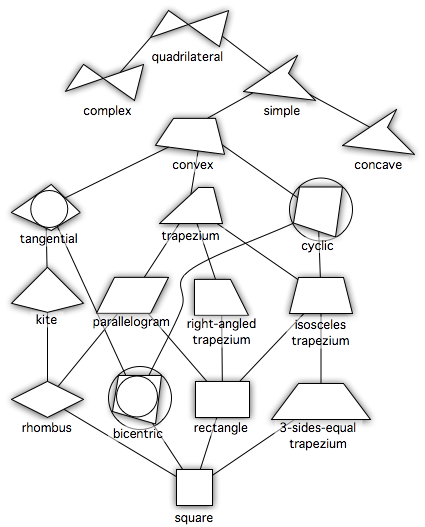
 I'm writing this entrance slip quite late and I have accumulated some knowledge during my two week practicum that changes how I would've have written this one month ago. Thinking on it now, there's a trend in mathematics that you define what you need and within the confines of which you need it. For example, a quadrilateral is defined as a four-sided polygon. We take it further by confining it within the boundaries with which we will see, study and use them; usually at least one set of parallel lines and all angles being less than 180 degrees. This type of approach although useful to serve a specific purpose could be considered a disservice to the imagination of people and to the things themselves. 

In Dr. Robin Wall Kimmerer's "Braiding Sweetgrass" she talks about a bay - or more accurately, to be a bay. In English we've used the word "bay". In Ojibwe, the word used to describe the same thing is "wiikwegamaa" which translates to, "to be a bay". Her explanation on a bay being alive and that it is not dead and thus cannot be referred to as a noun but instead a living, moving being as a verb is something that truly captivated me. If you go to a bay you can see the current from the sea/ocean. You can see the tide rhythmically bouncing off the shore. It is being. 

I think the grammar of animacy itself as Dr. Kimmerer calls it is something important that can be shared and discussed in every classroom - especially with younger students. Adding this layer of recognizing plants and animals for something outside what we as humans interpret them as will allow one to show a more wholesome level of respect to their surroundings. 

Friday, September 27, 2024

A Note on Students

my bullrush keychain rope
We may be more mature; we may be referred to as colleagues however we are still in some ways, students. I can't recall the last time when I did not hear a single zipper or the sound of someone packing up nearing the end of class. Considering this class went over, this feat is even more astonishing. I remember looking at the clock as it was nearing 12:20 pm and then looking around the class and absolutely nobody was packing their things. They were either consumed with their braiding, or looking at whoever was sharing. Honestly, I found it really interesting and began thinking about why this was the case. We were all in school. It was a relatively early start to the day and it was nearing the end of the week. It was a long class. We were in a classroom. The only difference I could identify was the nature of what we did in class. Rope braiding was very relaxing. It was interesting and there was enough of a variety of material for people to explore and exercise curiosity. It was a simple enough task, with enough complication to require some attention but not all. I don't know - it was almost like a perfect intersection of many things. Throw in Jacob's carrots and the combination was without flaws. A lot more can be said on this and I'm sure I'll look back and ponder on this specific classroom experience for many years to come. 


Kallis and Backsourcing

 As I was reading the short excerpt from chapter two from Sharon Kallis' book "Common Threads", I found myself thinking about another book I had read a bit of. Sharon Kallis mentions the divestment of the responsibility of taking care of oneself. This notion reminded me of something I had read in Gai Eaton's "King of the Castle: Choice and Responsibility in the Modern World"; in it he mentions that at the beginning of the twentieth century over (I think) ninety percent of people were responsible for their own income and the remaining worked for someone else. Due to industrialization (among other things), by (I think) the eighties, those proportions were reversed with a large percentage of the population now working for someone or some company. My memory eludes me however to my faint recollection, he discusses the profound impact on man's inability to sustain his livelihood with his own two hands (going against man's predisposition). There is a sense of unmatched fulfillment in sustaining oneself with their own two hands and Kallis is correct in pointing this out. As I was reading, I was thinking that her idea requires a complete alteration of the current construction of society and she made mention of that (consumerism). 

I go home to visit my family in December, God-willing I'm going to make my niece a scarf using the Turkish lace method. 

Final Blog Post

It is hard to separate this inquiry class with the garden - if there's any class I feel most attached to the garden it is inquiry. Perha...